
Your website does not need to win design awards. It does, however, need to make a strong first impression, explain what you do and help potential customers take the next step.
The problem is that websites rarely stop working overnight. They become less effective gradually. Pages load a little more slowly. The design starts to feel dated. Services change, but the copy does not. Enquiries drop off, and nobody is quite sure why.
So, how do you know when a few small updates will do, and when it is time for a proper website redesign?
Here are seven signs your business website may be ready for a rethink.
1. Your website looks outdated
People make quick judgements online. If your website looks as though it has not changed in years, visitors may assume the same is true of your business.
An outdated website often includes:
- Cluttered pages with too much competing information
- Small text or hard-to-read fonts
- Old-fashioned colours, graphics or stock photography
- Inconsistent spacing and page layouts
- Navigation that feels more complicated than it should
This does not mean following every passing design trend. A good business website should feel current without becoming dated again six months later. Clear layouts, strong typography, useful content and a consistent visual identity tend to last much longer than gimmicks.
Your website should also reflect the business you are today. If your brand, team, services or customers have changed significantly since the site was launched, a redesign can bring your online presence back into line with reality.
2. It does not work properly on mobile devices
Try opening your website on a phone and completing the most important customer journey. Can you find a service, read the page, use the menu and send an enquiry without pinching, zooming or tapping the wrong thing?
If not, your website is creating unnecessary work for potential customers.
A mobile-friendly website should have:
- Text that is easy to read without zooming
- Buttons and links that are simple to tap
- Fast-loading pages
- Clear, compact navigation
- Forms that are easy to complete on a small screen
- Images and content that resize without breaking the layout
Responsive design, which simply means a website that automatically adjusts to fit different screen sizes, is not an optional extra. Your customers move between phones, tablets and computers, and they expect a consistent experience on all of them. If the mobile version feels like a squeezed-down copy of the desktop site, it is probably time for a redesign.
3. The site is slow
Slow websites test people’s patience. A visitor who has to wait for a page to load may leave before they see your offer, portfolio or contact details.
Poor performance can be caused by oversized images, a website design template carrying lots of features you do not use, unnecessary add-ons, outdated code or poor hosting. Hosting is the service that stores your website and makes it available online. Years of unplanned changes can also slow things down. These problems make the website harder to maintain and more likely to develop faults.
Some speed issues can be fixed without rebuilding the whole site. But if the problems come from the basic system used to build and manage it, repeated repairs may cost more than they solve.
A well-planned redesign gives you the opportunity to simplify the underlying build, optimise images and code, and focus every page on what visitors actually need.
4. Visitors are not turning into enquiries or sales
Traffic is useful, but traffic alone does not grow a business. Your website needs to help the right visitors understand your value and take action.
Common conversion problems, meaning issues that stop visitors becoming customers or making an enquiry, include:
- A homepage that does not clearly say what the business does
- Service pages focused on features rather than customer outcomes
- Calls to action that are vague, inconsistent or difficult to find
- Long or intrusive forms
- No case studies, testimonials or other proof
- Too many competing choices on each page
If people visit but rarely contact you, request a quote, book a call or make a purchase, the issue may not be the amount of traffic. It may be the experience visitors have when they arrive.
A website redesign focused on generating more enquiries or sales gives every page a clear purpose. It removes distractions, answers likely questions and creates an obvious next step. In other words, it helps your website do more of the heavy lifting.
5. Your content no longer matches your business
Businesses evolve. You may have added new services, changed your ideal customer, moved location, raised your prices or developed a stronger point of view. If your website still describes the old version of the business, it can attract the wrong enquiries or fail to attract any at all.
Watch for content that:
- Mentions services you no longer provide
- Omits important parts of your current offer
- Uses vague language that could describe any competitor
- Speaks to customers you no longer want to target
- Contains old team details, contact information or accreditations
- No longer sounds like your brand
A redesign is not just a visual exercise. It is a chance to clarify your positioning, organise information around customer needs and make every page earn its place.
Strong copy should quickly answer three questions: what do you do, who do you help and why should someone choose you?
6. It is difficult to update or maintain
You should not need a developer every time you want to change a sentence, add a project or publish an article. Equally, your website should not rely on a tangle of add-ons and makeshift fixes that nobody wants to touch.
Warning signs include:
- Routine updates regularly break the layout
- Nobody knows how parts of the site work
- The system you use to edit the website is no longer supported
- Add-ons or connections to other services, such as booking or payment tools, are outdated
- Publishing simple content takes far too long
- The website cannot support new features the business needs
A modern website should be built for the people who manage it as well as the customers who use it. That means a sensible content structure, dependable technology and an editing experience that suits your team.
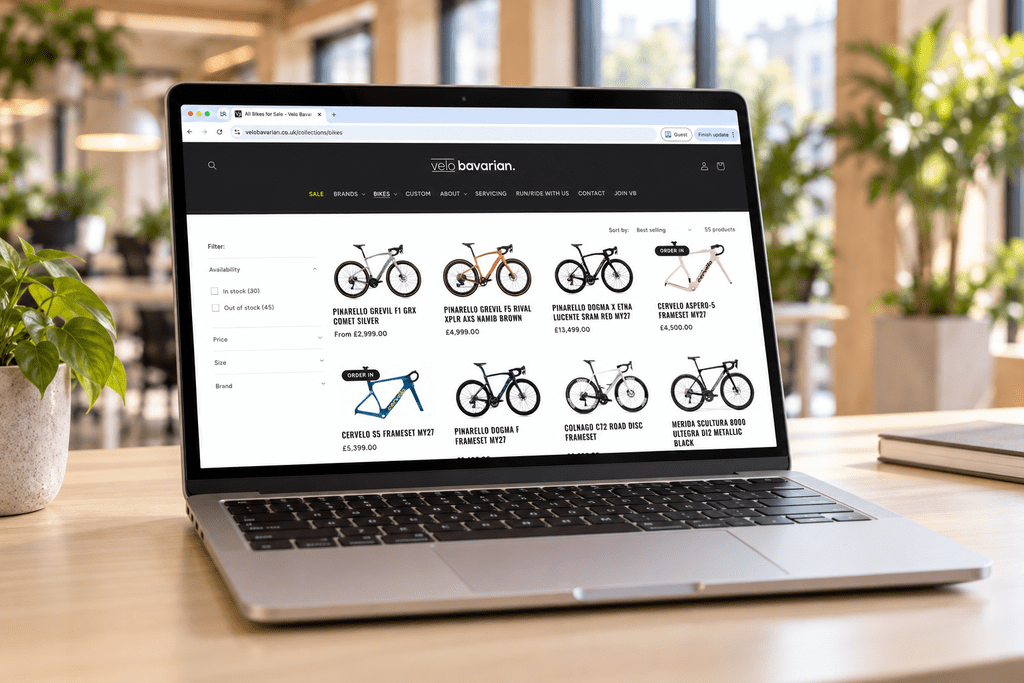
This was one of the main challenges for Velo Bavarian. Its previous website made adding new bikes difficult and time-consuming, which meant a routine business task became an unnecessary burden. Bear Mountain Digital rebuilt the site so owner Luke could add bikes, update product details and publish content himself. You can see how the new website made day-to-day management easier in the Velo Bavarian Shopify website case study.
If maintaining the site has become a source of stress, a redesign can replace years of technical baggage with a cleaner setup that is easier to manage and can grow with your business.
7. Your search visibility is falling
There are many reasons a website can lose visibility in search results, so a redesign is not automatically the answer. However, an outdated structure can make search engine optimisation, usually shortened to SEO, much harder than it needs to be. SEO is the work involved in helping your website appear when potential customers search on Google or another search engine.
Your website may be holding back your search performance if it has:
- Thin, duplicated or outdated content
- Confusing page hierarchy and navigation
- Missing or poorly targeted service pages
- Broken links and outdated redirects, which should automatically send visitors from an old page address to the correct new one
- Slow performance on mobile devices
- Pages that search engines struggle to find, read or understand
- No straightforward way to publish useful new content
A redesign should protect what already works. Your current positions in search results, links to your website from other sites and important page addresses all need to be reviewed before anything changes. Old page addresses should be carefully connected to their new versions so that visitors do not reach an error page. Content should be improved rather than discarded without a plan.
Done properly, a website redesign creates a stronger base for SEO. That means clearer pages, useful links between related pages on your own website, better speed and content that matches the phrases your potential customers search for.
Do you need a full website redesign?
Not every problem requires a new website. A focused performance fix, content refresh or landing-page update may be enough if the underlying site is sound.
A full redesign is more likely to make sense when several of these signs appear together, particularly when the website no longer represents the business, generates too few enquiries and is difficult to improve within its current setup.
Before making the decision, look at the evidence:
- Which pages attract visitors?
- Where do people leave?
- Which devices do they use?
- Are enquiries relevant and good quality?
- Can customers quickly find the information they need?
- What business goals must the website support over the next few years?
The answers will help separate cosmetic preferences from genuine commercial problems.